
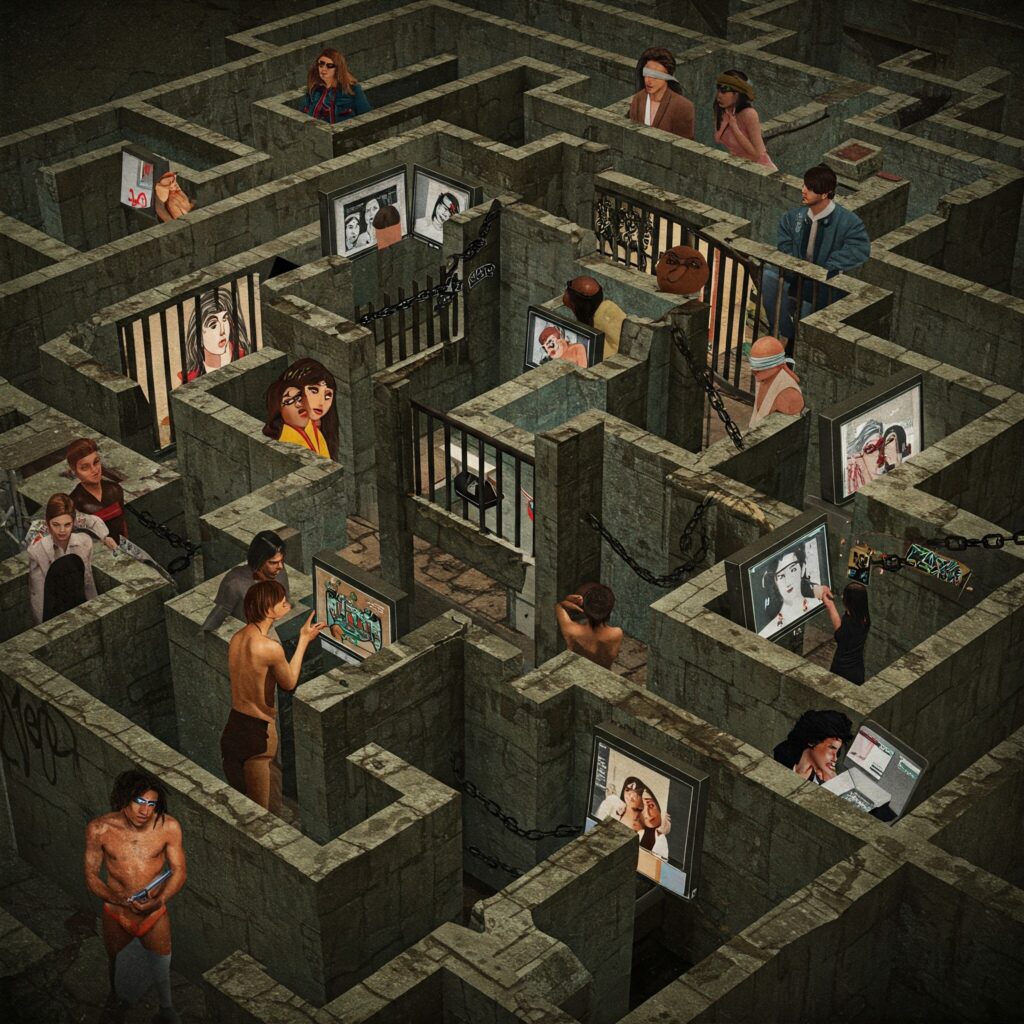
Pornography, a cultural and social phenomenon as ancient as humanity itself, is constantly at the centre of a complex debate that oscillates between freedom of expression and need for protection, especially the most vulnerable bands. Its legality, far from being a uniform concept, is manifested in a mosaic of laws, regulations and interpretations that vary not only from country to country, but also within the same cultural contexts. In this article, we will explore the situation of pornography in Italy and Europe, then make a leap in some areas of the world where the legal scene is particularly interesting or controversial.
La Pornografia in Italia: A Precarious Balance
In Italy, the production, distribution and consumption of adult pornography are generally legal. However, this freedom is not unconditional. The Italian law, like many others, imposes an invariable limit: the protection of minors.
The Law and the Protection of Minors
The focus of Italian legislation on pornography revolves around article 600-ter of the Criminal Code, which severely punishes the production, detention, distribution and exchange of pedopornographic material. Penis for those who violate this law are very strict and can predict reclusion up to 12 years, as well as salt fines.
In addition to pedopornography, pornography that involves minors, although not explicitly sexual, is considered crime. The Italian law is very sensitive to the protection of the image and the welfare of minors and punishes anyone who exploits or puts children at risk for pornographic purposes.
The Concept of “Holiness” and “Pudore”
The Italian law, inherit a cultural tradition linked to the concept of “pudore” and “decency”, does not allow the public diffusion of material considered “obscene”. However, the definition of obscenity is left to the interpretative discretion of the courts, which sometimes leads to conflicting judgments. Generally speaking, adult pornographic material, if not exposed in public places and accessible to children, is considered legal.
La Pornografia Online: Challenges and Ambivalences
The Internet has radically transformed the way pornography is produced, distributed and consumed. The ease of access to this type of material has made the need to protect minors even more urgent. The Italian law, although not having a specific norm for online pornography, also applies to the web: who spreads or exchanges pedopornography on the internet is persecutable penally.
Another problem related to online pornography is the difficulty of control and enforcement of the law. The transnational nature of the internet makes complex the tracing and punishment of offenders. The anonymity and the possibility of using server sites in different countries complicate the work of authorities.
Pornography and the Protection of Dignity
In Italy, the debate on pornography is increasingly intertwined with that on the protection of female dignity and the fight against gender violence. Several feminist associations and movements emphasize how pornography, especially the one based on violent or degrading representations of women, can fuel harmful stereotypes and contribute to perpetuating dynamics of patriarchal power.
The Situation in Europe: A Mosaic of Regulations
The legality of pornography in Europe is a complex and fragmented subject, which reflects cultural diversity and values of individual Member States. The European Union has no unified pornography legislation, leaving the individual countries free to define their own limits and rules.
Countries with More Liberal Regulations
Some European countries, such as the Netherlands and Denmark, have a more liberal approach to pornography, focusing mainly on prevention of damage and child protection. In these countries, adult pornography is legal, provided you do not violate human rights and do not exploit minors.
Countries with More Restrictive Regulations
In other countries, such as Poland or Ireland, pornography laws are more restrictive, often influenced by a strong Catholic tradition. In these countries, the production and dissemination of pornographic material can be subject to stricter restrictions and controls.
The Protection of Minors: A Shared Urgence
Despite legislative differences, all European countries share the goal of protecting minors from the risk of sexual exploitation and exposure to inappropriate pornography. European laws and EU directives lay down common rules to combat child pornography and ensure the safety of children online.
The Budapest Convention on Cybercrime
An important international tool to combat cybercrime, including crimes related to pornography, is the Budapest Convention on Cybercrime. This Convention, ratified by many European countries and not only, provides a legal basis for international cooperation and information exchange between the authorities dealing with the fight against cybercrime.
A glance in the world: Interesting situations and Curiosities
In addition to Italy and Europe, the legality of pornography is manifested in very different forms in other parts of the world. Here are some particularly interesting cases:
- United States:In the United States, pornography is protected by the First Amendment of the Constitution, which guarantees freedom of expression. However, federal law and state laws prohibit the production and distribution of pedopornographic material, and regulate the sale of adult pornography. There is a heated debate between conservative groups calling for greater restrictions and liberal groups defending freedom of expression.
- Japan:In Japan, pornography is legal, but with some limitations. The law prohibits explicit representation of genital organs, which led to the spread of censored pornography. However, there is a broad market of uncensored pornography, which is often sold anonymously or through alternative channels. An interesting aspect is that in Japan the production of pornography is a very high level industry, and films are often considered “art” products.
- Iran:In Iran, pornography is illegal and severely punished. Iranian law, inspired by Islamic religious precepts, considers pornography a form of immorality and corruption. Whoever produces, distributes or consumes pornographic material risks severe penalties, including imprisonment and forging. Access to pornographic websites is blocked and authorities control the online activity of citizens.
- Southeast Asia:In many South-East Asian countries, the situation of pornography varies according to religion and dominant culture. In countries with a strong Muslim tradition, such as Indonesia and Malaysia, pornography is forbidden and often considered a serious offence. In other countries, such as Thailand and the Philippines, adult pornography is legal, but subject to controls and limitations.
- The Impact of Technology:The spread of the Internet and social media has made the regulation of pornography even more complex globally. Governments in many countries face new and difficult challenges to ensure child protection and to combat the spread of illegal online materials.
Conclusions: An Open Debate
The legality of pornography is a complex and controversial subject, which reflects the values and priorities of each society. While some countries opt for a more liberal approach, based on freedom of expression and harm prevention, others prefer a more restrictive approach, based on morality and the protection of traditional values.
What is certain is that the debate on pornography is intended to remain open and evolve over time, especially in the light of rapid technological changes and new social challenges. The challenge for legislators around the world is to find a balance between freedom of expression and the need to protect children and vulnerable people from all forms of exploitation and abuse. The road to effective and fair regulation of pornography is still long and windy, but it is a necessary path to build a safer and more respectful world of the rights of all.